

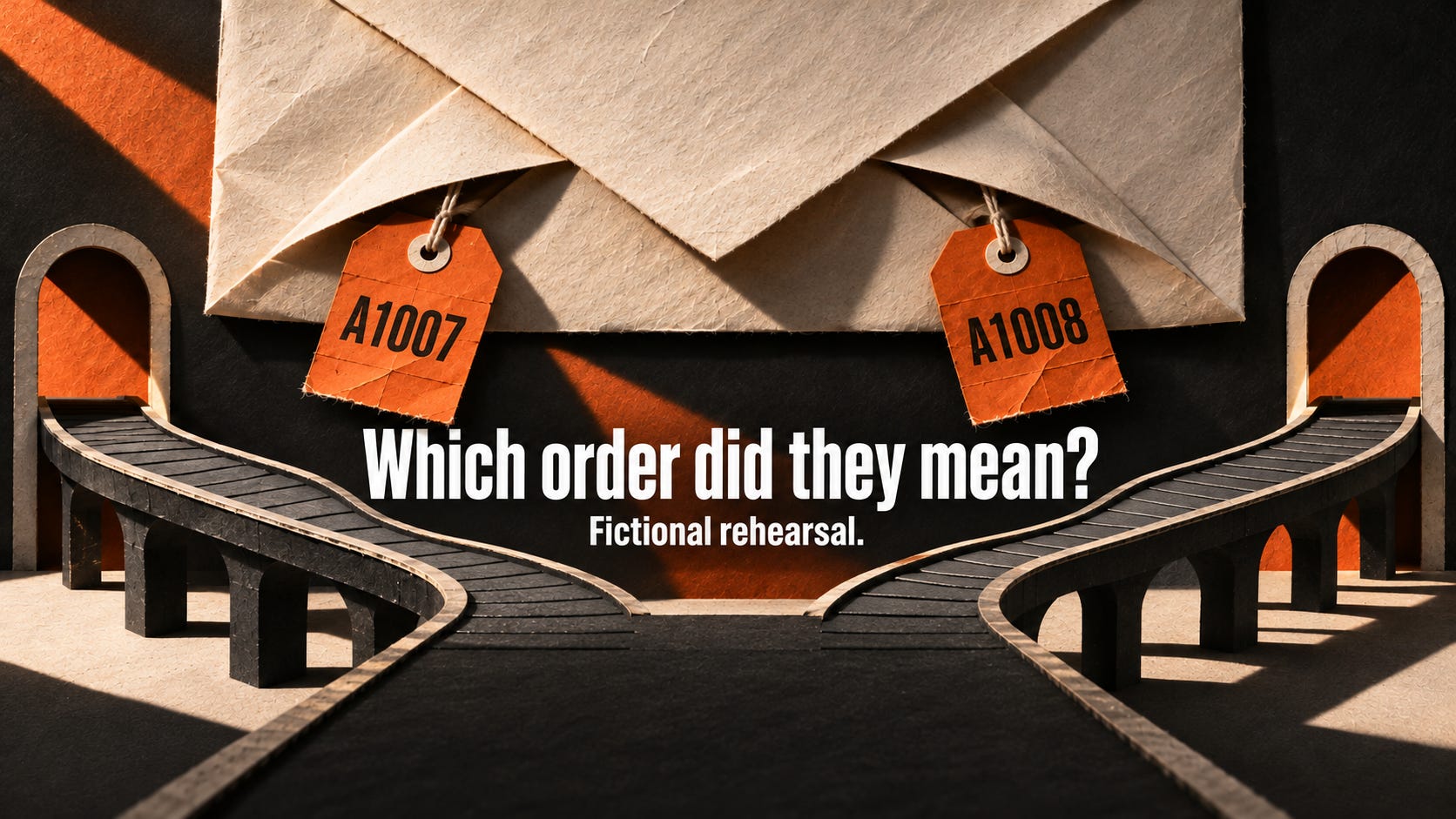
Imagine a delivery-address request with A1007 in the subject and A1008 in the message itself. In this fictional support rehearsal, the address could be perfectly clear. The order is not.
A polished response that quietly picks one reference would hide the very thing this test is meant to reveal. Put the expected unresolved field on the page before you run it.
Write the expected gap first
Before running the fixture, record what a usable preparation should preserve:
Request: delivery-address change
Subject reference: A1007
Body reference: A1008
Target order: unresolved
Proposed next action: ask which order the request concerns
Review state: hold the proposed edit
This is an invented test message, not a customer case. Its expected output is a gap that stays visible. Looking up either record may provide more facts, but the existence of a valid order would not by itself establish which one the message meant.
We like this small test because it exposes a failure that can disappear in a fluent answer. The output might quote the correct address and still attach it to the wrong purchase. A reviewer needs the conflicting references beside the proposed next move.
Keep the awkward input unchanged
Save the original fixture before testing. If you repair the subject line first, you have changed the problem. Keep any cleaned version separate so you can tell which input produced which output.
Then compare the result with the expected gap. Did both references survive? Did the output identify the target as unresolved? Did it propose a question, or did it turn a guess into an instruction? These checks describe the record you wanted, rather than reward a reply merely for sounding decisive.
One passed fixture would establish only that the system handled this example in this run. It would not establish reliability across every ambiguous request. Keep the failed outputs too; they help define the next change to test.
The Shopify rehearsal shows where a missing fact belongs in a decision packet:
https://www.rebuildshow.com/p/shopify-the-ticket-is-classified
Add one deliberately conflicting reference to your next rehearsal. Write the expected unresolved field before you see the output, then check whether it remains visible all the way to review.
The Rebuild Editorial